"Caveat Emptor"
Let the Patient beware
Note: The information below is
not a blueprint for anyone to follow as everyone has a different set of problems
of their own when they become a patient. The information is in the form of
"Education" similar to a general education teaching one how to think.
When you have a health issue you had
better put yourself in the role of a thinker/manager. A thinker
analyzes all the information they receive and the more input you receive the
better the outcome. I found that although I didn't agree entirely with all the
medical contacts I made, I came away from every relationship with something of
value. I did have one Doctor a Chiropractor that took me
through a series of tests that included walking on my toes, my heels and bent my
knees in all directions to appraise the condition of my knees. He was
determined to discover how much of my overall problem was caused by my ailing
knees. I
might add that his appraisal did not indicate my overall problem was due to the
condition of my knees and suggested exercises for sciatica, sacroiliac as well
as my glutes and flexors. All the rest, 7 individuals looked at my
knee x-rays and didn't even bother testing my knees as the one Chiropractor did.
I believe this to be alarming.
I found in my case that all contacts
took the line of least resistance because of the complexity of my problem.
In my particular case they all keyed in on a knee issue that I have had for 30
years and disregarded the accident implications. You are the only
one that will determine the degree of your success and don't allow any one to
tell you differently. Again "Let the Patient beware".
 I
have been going through an incredible medical experience the past 12 months with
the combination of an aging knee, along with an accident where I twisted my knee
and leg in a kitchen fall. For years I have had an inherent stress problem with
the tendons inside and outside of my legs caused by bow legs and an imbalance
issue that built up muscles on the outside of my legs and weakened the muscles
on the inside. This was the result of a handball game that I have
played for 35 years. In my agricultural career and the multiple crops we
grew along with our roadside market operation, I was continually exposed to a
diversification of physical activities and this was a Godsend. When I
retired I took on a lifestyle that was more repetitive and this is where my
problems started. This is why good therapists will tell their clients that
they need a diversified schedule of physical activities to eliminate the
imbalance problems. If you go to an exercise facility insist on a
diversification program although it is critical a good cardio session on a
treadmill is important on a regular basis. I personally believe everyone
should have a treadmill in their homes because the dynamics of a treadmill is
hard to beat especially how it applies to balancing the muscles in the legs.
I
have been going through an incredible medical experience the past 12 months with
the combination of an aging knee, along with an accident where I twisted my knee
and leg in a kitchen fall. For years I have had an inherent stress problem with
the tendons inside and outside of my legs caused by bow legs and an imbalance
issue that built up muscles on the outside of my legs and weakened the muscles
on the inside. This was the result of a handball game that I have
played for 35 years. In my agricultural career and the multiple crops we
grew along with our roadside market operation, I was continually exposed to a
diversification of physical activities and this was a Godsend. When I
retired I took on a lifestyle that was more repetitive and this is where my
problems started. This is why good therapists will tell their clients that
they need a diversified schedule of physical activities to eliminate the
imbalance problems. If you go to an exercise facility insist on a
diversification program although it is critical a good cardio session on a
treadmill is important on a regular basis. I personally believe everyone
should have a treadmill in their homes because the dynamics of a treadmill is
hard to beat especially how it applies to balancing the muscles in the legs.
As we age
Let me
pass on to you a personal
experience that caught up to me because things change as you grow older. I
mentioned above diversification in
 activities especially as we grow older.
I had a habit of getting up in the morning not doing much in exercise and
rushing off to my love the paddle ball courts. This was a throw back of my
youth and handball on the school yards of New York City. In those days it
was a luxury to have a ball usually a 15 cent "pinkie" and our two hands.
We are talking right after the depression.
activities especially as we grow older.
I had a habit of getting up in the morning not doing much in exercise and
rushing off to my love the paddle ball courts. This was a throw back of my
youth and handball on the school yards of New York City. In those days it
was a luxury to have a ball usually a 15 cent "pinkie" and our two hands.
We are talking right after the depression.
Unfortunately with old man time a 2
hour session on the paddle ball courts virtually wiped me out for the day
leaving a little energy for my regular garden chores but not much. I have
come to the conclusion that as we age we need to reserve time for varied
physical activities and not wipe ourselves out exclusively with things that we
love to do.
Therapy
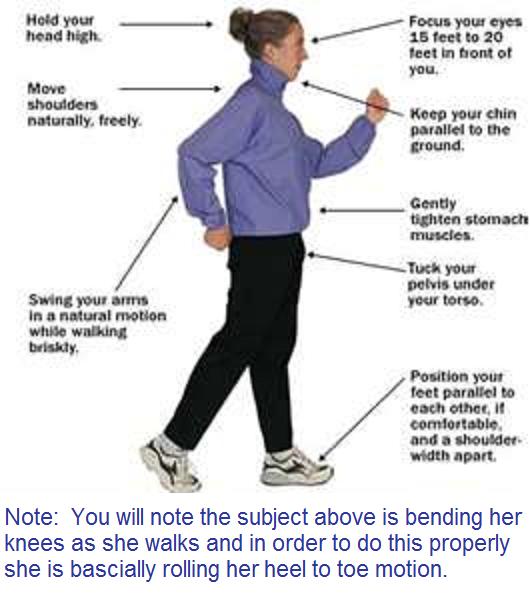 In addition on my last visit of 9 therapy sessions one therapist told me "Bob, you have to learn how to walk properly"
I had developed bad habits in my gait along with the infirmity aspects brought
on by the accident. I was
stunned by the comment and sent me on another examination of my lifestyle that
created my "Walking" problem. It turns out that beating my
brains out on a handball court, created a bent over crippling walking style.
My body at 76 could not tolerate what it could at 40 and 50 years of age.
Faulty foot ware can produce the same results. Repetitive activities build up muscles in some areas and actually weaken opposing areas.
Diversify. A treadmill and the regular use of it produces a balance as
well as walking. I might add walking backwards in part of your walk will
really help. You will be surprised how much different walking backwards
will apply a different set of dynamics to your legs and hips. In fact when
you are sore the next day from this practice this will confirm that you need
this added to your walk.
In addition on my last visit of 9 therapy sessions one therapist told me "Bob, you have to learn how to walk properly"
I had developed bad habits in my gait along with the infirmity aspects brought
on by the accident. I was
stunned by the comment and sent me on another examination of my lifestyle that
created my "Walking" problem. It turns out that beating my
brains out on a handball court, created a bent over crippling walking style.
My body at 76 could not tolerate what it could at 40 and 50 years of age.
Faulty foot ware can produce the same results. Repetitive activities build up muscles in some areas and actually weaken opposing areas.
Diversify. A treadmill and the regular use of it produces a balance as
well as walking. I might add walking backwards in part of your walk will
really help. You will be surprised how much different walking backwards
will apply a different set of dynamics to your legs and hips. In fact when
you are sore the next day from this practice this will confirm that you need
this added to your walk.
When muscles become tight from over
use and opposing areas weaken this leads to for one thing sheath tissue losing
its ability to become adequately attached to the bone. Shin splints are a
perfect example of this problem. Hence pain. If you have pain in and
around your Tibia bone this is usually an indication of poor imbalanced muscles.
Unfortunately when muscles become
either too tight and or weak, communication with the brain is affected and this
leads to more problems, circulation for one. Circulation being blood,
lymph and electrical.
One dispute I had with a Doctor was
his approach to what he referred to as a neurological issue. There was no
question I had a neurological issue, the question was what comes first the
chicken or the egg. He completely avoided any physical
activities other than a bike with some oxygen and discouraged me from any
physical activities (even if there was no discomfort) and relied on some
pet neurological tests and procedures that again to me was putting the cart
before the horse. I believe that in most cases following an injury should
involve physical fitness as long as it does not conflict with healing the
problem. There are cases where a Doctor will recommend casting and
crutches. In this case I still believe daily diversified exercises in all
areas should be implemented. Of course avoiding any exercises that
are involved with the area that is casted.
Diet and Autoimmune
There is the issue of diet and auto
immune responses that creates inflammation and discomfort that in turn has a
great deal to do with posture and crippling symptoms that indirectly cause other
problems. A crippled body presents congestion that in turn has a negative
effect on the circulatory system, venial, lymph and electrical. It is what can easily be called "The vicious cycle".
In my opinion it is the first thing you should address, proper diet and check
out what foods that you are intolerant too.
Professional Help
There appears to be a general
practice where whomever you go to for help for the most part they will do
everything possible to convince you that they know what your problem is and they
can fix you up. They never tell you they use a process of elimination to
try and find out what your problem is and they pray that they can connect their
field of expertise to your problem. I personally do not have a problem
with the process of elimination as I used this regularly in my agricultural
career. My problem is that all of my contacts with the exception of a
podiatrist will keep you coming forever.
In my personal experience there
is no question as stated above that anyone that hits my age (76) you are lucky
if you are not subjected to many issues including the primary symptoms for
seeking out professional medical services.
I refer to the degree of the many
issues that are brought into the picture because although Doctors are geared to
treat the symptoms, they have to consider and treat the cause if they can lay
their hands on it and this is where the challenge lies when you are dealing with
different specialties.
If you take neurological
implications as they may apply to a patient falling because of an imbalance
problem. Most neurological specialties will be anxious to correct this
imbalance issue. They don't want you walking out of their office on a visit and
falling on your face, even though they are not addressing the immediate injury
that brought you to a Doctor in the first place. I mentioned previously
that congested areas can cause nerve problems and hence communication
difficulties between the brain and an entire area such as your lower
extremities.
My problem is that a neurologist can
spend months and months treating your neurological problems and not directing
you lets say to a therapist to ward off atrophy consequences or for that matter
a podiatrist that could correct your foot ware. This may have been directly
responsible for you falling or putting pressure on parts of your lower
extremities caused by poor foot ware that is not correcting a serious foot
issue.
Your GP
 Your
GP is programmed to send you to
specialists if he/she believes you need one, although keeping in touch with your GP periodically with information regarding
specialists you have seen is not a bad idea. Your GP is most likely much
better equipped to analyze the advice you are given by a specialist. We
had our GP countermand a particular issue with my wife's thyroid prescription from an endocrinologist
related to blood tests. Turns out our GP was right and the specialist was
wrong.
Your
GP is programmed to send you to
specialists if he/she believes you need one, although keeping in touch with your GP periodically with information regarding
specialists you have seen is not a bad idea. Your GP is most likely much
better equipped to analyze the advice you are given by a specialist. We
had our GP countermand a particular issue with my wife's thyroid prescription from an endocrinologist
related to blood tests. Turns out our GP was right and the specialist was
wrong.
Dedicated Professionals
There certainly are a good percentage of professionals that are dedicated. I believe that most professionals are so caught up in their specialty
that they sincerely believe and can attach their expertise to your problem.
They just do not want to accept the degree of their contribution short of 100%.
If you go to a Doctor that is
studying neurological issues let alone a neurologist and you are getting along
in years you can bet your booty they will come up with a dramatic neurological
issue that they say caused your problems. Again to repeat the neurological
problem could be the aftermath of an underlying problem such as the negative
aspects of an injury or the repetition of your feet slamming on a hard court for
years on end.
Sure neurological problems in the
aging is common but again to what degree is it contributing to your
problem, 10%, 30%, 60% who knows, but you could waste months and many
dollars before you come to the conclusion that there are other extenuating
circumstances surrounding your problem.
What are you suppose to do hire a
professional medical manager for your problem, perhaps if you are Donald Trump or Lebron
James? It would be nice if everyone had the luxury of having a
professional physiotherapist from the Miami Heat looking after you.
It is easy for atrophy to set in to an inactive patient.
Don't let that happen. No matter who you are seeing, check out the
thoughts of a physical therapist. He/she will guide you and protect you
from doing anything to exacerbate a problem. You should have imaging
prints and data when you approach any professional.
If I learned anything at all
with the last 12 months as the old saying goes "If I had to do it all over
again" I would have seen a Doctor first to address immediate medical
needs, which I did, consent to some imaging which I did and
regardless of what is determined I would look up a good physical therapist
before I got roped into all the premature issues I did from nutrition, neuropathy, allergies, muscle strengthening etc.
Again these issues may be important to address in time, but don't let months and
months go by without working your body safely.
Physical Therapy when?
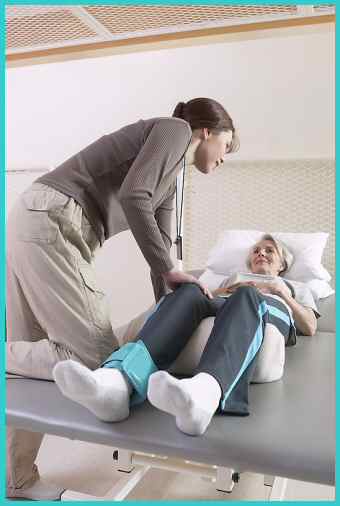 A
good physical therapist is trained to not exacerbate a problem at the start of
an injury healing process. I was apprehensive about this and one of the
reasons I mistakenly avoided one, but I was wrong and it set me back. Try
to get your Doctor to give you a script to a physiotherapist before you see a
surgeon. I had one orthopedic surgeon tell me that surgery could leave
me worse than before and encouraged me to do exercises to build up and balance
the soft tissue around the skeletal areas at least before surgery is decided
on.
A
good physical therapist is trained to not exacerbate a problem at the start of
an injury healing process. I was apprehensive about this and one of the
reasons I mistakenly avoided one, but I was wrong and it set me back. Try
to get your Doctor to give you a script to a physiotherapist before you see a
surgeon. I had one orthopedic surgeon tell me that surgery could leave
me worse than before and encouraged me to do exercises to build up and balance
the soft tissue around the skeletal areas at least before surgery is decided
on. I know now from the experience I had with the therapists I used at the end of
my process that they were very careful not to do any harm considering the
injury I had. Now that is not saying that you won't run into an overzealous
Chiropractor or Therapist. I would say ask around the medical
circles and see if you can line up a good honest competent therapist before
hand.
ICE
My suggestion is when you have a
medical problem go to school on it, learn all the variables that could be
involved with your problem. If you have an injury ice it on the spot, keep
that initial area from swelling up. Any type of a inflammation causing
practice, therapy for one requires ice ASAP. You may be doing a prolonged
therapy regimen for a long period of time that will require icing.
The longer you wait to ice the longer it is going to take to heal. Keep a
couple of packs of frozen peas on hand. My wife recently removed some of
the peas from the package and put them into plastic zip lock bags. With
two bags and thinner, this made application more comfortable and practical.
They will conform to most body configurations and the sugar in the peas will not
allow the package to get rock hard. Put a note on the peas that they
should not be eaten as with the thawing and freezing of the product it will degrade the quality of it.
 My wife recently obtained from a
Chiropractor a liquefied bag similar to these ice blocks and bags that they use
for ice coolers. The chemistry of the liquid in these bags etc. have the
ability to stay colder longer than water. Unfortunately the liquid does
freeze hard unlike peas in a bag that has the sugar of the peas that
prevents the content from freezing hard. A hard frozen bag does not
conform to the nooks and crannies of the body. It was suggested that we
keep the bag in the refrigerator versus the freezer that does diminish the cold
intensity a bit but not necessarily to the processes detriment. We found
that the bag out of the refrigerator can be left in place longer versus the
negative aspect of a frozen bag on an area for a prolonged period.
My wife recently obtained from a
Chiropractor a liquefied bag similar to these ice blocks and bags that they use
for ice coolers. The chemistry of the liquid in these bags etc. have the
ability to stay colder longer than water. Unfortunately the liquid does
freeze hard unlike peas in a bag that has the sugar of the peas that
prevents the content from freezing hard. A hard frozen bag does not
conform to the nooks and crannies of the body. It was suggested that we
keep the bag in the refrigerator versus the freezer that does diminish the cold
intensity a bit but not necessarily to the processes detriment. We found
that the bag out of the refrigerator can be left in place longer versus the
negative aspect of a frozen bag on an area for a prolonged period.
I might add that using this cold bag
concept that my wife has continued using on a back muscle issue even when
there is hardly any discomfort left with the goal of completely eradicating the
problem, versus allowing it to come back on a full bloom basis.
We believe that completely ridding an area of inflammation goes a long way in
preventing recurrence. Keeping a cold bag not frozen on a healing
area has the ability to let the body heal completely.
In addition, we are
experimenting right now with a practice where when she goes to play tennis she
uses the application bag fresh out of the refrigerator in back of her on her
back when she drives the 30 minutes or so to the courts.
She also packs a small ice cooler
where she puts 2 ice chest bricks on the bottom of the chest and an ice chest
bag with the special solution into the ice chest.
 When she arrives at the tennis
facility she takes the application bag she has been using in the car on her
back, places it in the ice chest on top of the frozen bricks. She then
takes the frozen ice chest bag that she has in the ice chest and puts it on top
of the application back bag. She also incorporates a little wash
cloth on top of everything for added insulation.
When she arrives at the tennis
facility she takes the application bag she has been using in the car on her
back, places it in the ice chest on top of the frozen bricks. She then
takes the frozen ice chest bag that she has in the ice chest and puts it on top
of the application back bag. She also incorporates a little wash
cloth on top of everything for added insulation.
When she finishes her tennis session
she prepares for her trip home that is very critical coming off a physical
inflammation generating event. She simply goes into the ice chest and
removes the application bag and uses it on her back for the trip home.
When she arrives home she places the
bags, bricks etc. back into the refrigerator and freezer for use during the day
and ready for the next auto trip.
Paper Cups
I have read that there is an
application where you take small paper cups, (use 2 of them inside one
another to insulate
your fingers from the cold ice when you use them) fill them with water and
freeze them. If you have an isolated problem, lets say a shin splint
issue take the cup and stripping off a good part of the paper cup and
leaving the bottom with the paper to again make it comfortable to hold as you
rub the area with the top part of the ice. If you believe you have a scar
tissue issue you may want to apply a little downward pressure to the area.
Between the ice constricting and actually rupturing the tissue the downward
pressure could increase the rupturing process and encourage blood flow and
healing. I usually follow an icing procedure with a warm spa or for
that matter hopping in the shower and applying warm water from a shower wand.
Forewarning Change
Let me finish this feature with a
warning. Changes occur in most any scenario including the aftermath of an
accident as I had. As I have related there were few medical contacts that
thought that I should address the implications of the accident I had as it
related to "What comes first the chicken or the egg?" I personally believe
that you cannot treat a problem until you address the most important issue going
on and a disability that some accidents can cause. I mean how can you
address neurological issues where the area involved is suffering from the after
effects of an accident?
Last but not least is the changes
that develop. In my particular case I was driven by maintaining my
physical condition that involved bringing muscle areas into balance along with
the other practices as in cardiovascular concerns.
Now with this entirely new approach
to my physical being I noticed shortly after I started to develop soreness in
the areas under my knees right down and on top of the Tibia as well as tendon
discomfort. It actually took me a good while before I came to the
conclusion that these new physical practices I was engaged in were causing
strain and the soreness. Keep in mind the new
 exercises that were causing
this added discomfort is not going away as fast as I would like. On the
other hand it took 70 years plus and 35 years of lateral movements on a paddle
ball court that created this muscle/tendon etc. imbalance. It would
be foolish to expect a quick fix. I might add a couple of walks a day puts a
different dynamics on the legs and of course discomfort continues.
exercises that were causing
this added discomfort is not going away as fast as I would like. On the
other hand it took 70 years plus and 35 years of lateral movements on a paddle
ball court that created this muscle/tendon etc. imbalance. It would
be foolish to expect a quick fix. I might add a couple of walks a day puts a
different dynamics on the legs and of course discomfort continues.
It has to be said that soreness
under my knees is a problem I have had for some time, years in fact. I
came to the conclusion that the same problem I have had for years is essentially
the same problem I am having with the new physical activities that are adding
new areas of strain and increasing the discomfort factor in the same areas.
This thinking came about when I
noticed an equal amount of discomfort on my right leg as on my left, which has
to discount to some degree the left knees negative implications as there is no
question my left knees condition was considered in just about all the contacts
we made and I personally believe that was a mistake in all cases. Although
I show a little closing in on the interior area of the right knees cartilage
compartment my right knee is sound.
Interesting theory
Last with all of the above theories
I recently decided to go to a local chiropractor to treat a lower back problem
and in the process discussed my leg issues. The numbing underneath the
knees all around to the calves on both legs led to a questioning by the Doctor.
He asked me two pertinent questions, the first was whether the problem was
symmetrical on both sides of my lower extremities. The answer was yes and
I could only answer that question after the symptoms of my fall in the kitchen
and my right leg issues had subsided. This took over a year.
The second question was when I encountered discomfort in my legs and back if it
was relieved in just a matter of seconds after sitting down. The answer
was yes. I was astonished that the Doctor with these two answers in
hand came to an immediate conclusion that my problem or at least the cause of my
symptoms were Spinal and in most cases was a slam dunk indication of spinal
stenosis. In my case he believed it was a lumbar stenosis problem, the
lower area of the spine.
He believed he could relieve the
problem with some spinal manipulation and stretching of the back and space
the vertebrae (even a millimeter or two) to take the pressure off of
nerves that were being pinched. I have had about 8 sessions and they have
helped considerably and this includes improvement not only in my legs, but also
my feet that have been a problem for years.
Keep in mind that the symptoms of
stenosis are not necessarily the root of your problem. There are hundreds
of underlying problems that can cause stenosis, diabetes for one, arthritis is
another. Lack of exercise especially stretching can be a factor as well as
repetitive activities without countering them is another factor.
Lastly, politely listen to the party you sit
down with and as the old saying goes.......
"Caveat Emptor"
Let the Patient Beware